
Polished concrete floors look stunning when they’re well-maintained, but many property owners on the Gold Coast and Brisbane don’t know where to start with cleaning polished concrete floors. The good news is that keeping them in top condition doesn’t require complicated techniques or expensive products.
At Wirth Floor, we’ve seen firsthand how the right cleaning routine protects your investment and keeps your floors looking sharp for years. This guide walks you through daily habits, deep cleaning schedules, and the mistakes that can damage your floors.
Your Daily Cleaning Routine Starts Here
The first 24 hours after installation set the tone for how long your polished concrete floor stays looking sharp. We recommend establishing a daily routine that takes less than 15 minutes but makes all the difference. Start each morning with a microfibre dust mop across the entire floor. This removes loose dust, sand, and grit that sit on the surface and cause micro-scratches when foot traffic pushes them around. Microfibre lifts particles rather than pushing them across the floor like a regular mop does. In high-traffic areas like entryways and kitchen zones on the Gold Coast and Brisbane, dust accumulates faster due to outdoor exposure and moisture. A quick daily sweep prevents that grit from embedding into the sealer. Never use a vacuum cleaner on polished concrete; the brush head scratches the finish, which damages the protective layer.

Spot Cleaning with the Right Products
When spills happen-and they will-treat them immediately. Coffee, wine, juice, and oils set into the surface within minutes if left alone. Wipe up the spill with a dry cloth first, then use a pH-neutral cleaner mixed with warm water on a damp cloth for the residue. Avoid acidic cleaners like vinegar, citrus-based products, ammonia, and bleach; these etch and dull the finish permanently. A neutral pH cleaner sits at 7.0, with a safe working range of 6.5 to 8.0 when diluted for actual use. For daily spot cleaning, a spray bottle with diluted pH-neutral cleaner and a microfibre cloth works best. The key is damp mopping, not wet mopping-excess water pools on the surface and can seep under the sealer, causing delamination and clouding over weeks. Wipe the area dry immediately after cleaning to prevent water spots and streaks that trap moisture underneath.
Weekly Refresh with Microfibre
Once a week, perform a proper damp mop of the entire floor using that same pH-neutral cleaner solution. Change your mop water halfway through if you cover a large area; dirty water spreads grime instead of removing it. For properties on the Sunshine Coast where salt air affects entryways, this weekly routine protects against salt deposits that dull the gloss. High-traffic zones wear faster, so inspect near doorways and furniture placement for dull patches. This weekly habit extends the time between deep cleans and keeps the floor looking uniform. Finish with a dry microfibre mop to eliminate any remaining moisture and restore shine. Once you establish this foundation, deeper maintenance becomes far more effective-which is where your monthly deep clean routine takes over.
Deep Cleaning and Stain Management for Polished Concrete
Your weekly routine maintains the surface, but polished concrete requires a thorough deep clean every month to preserve that factory-fresh appearance. A monthly deep clean removes embedded dirt that daily mopping misses and refreshes the sealer’s protective layer. For this task, you need a proper polished concrete cleaner formulated specifically for sealed concrete surfaces. Standard all-purpose cleaners leave residue that dulls the finish over time, and they often contain alkaline or acidic components that compromise the sealer. The right product suspends dirt particles so they lift away rather than grinding into the surface under foot traffic.
Dilution Ratios and Application Methods
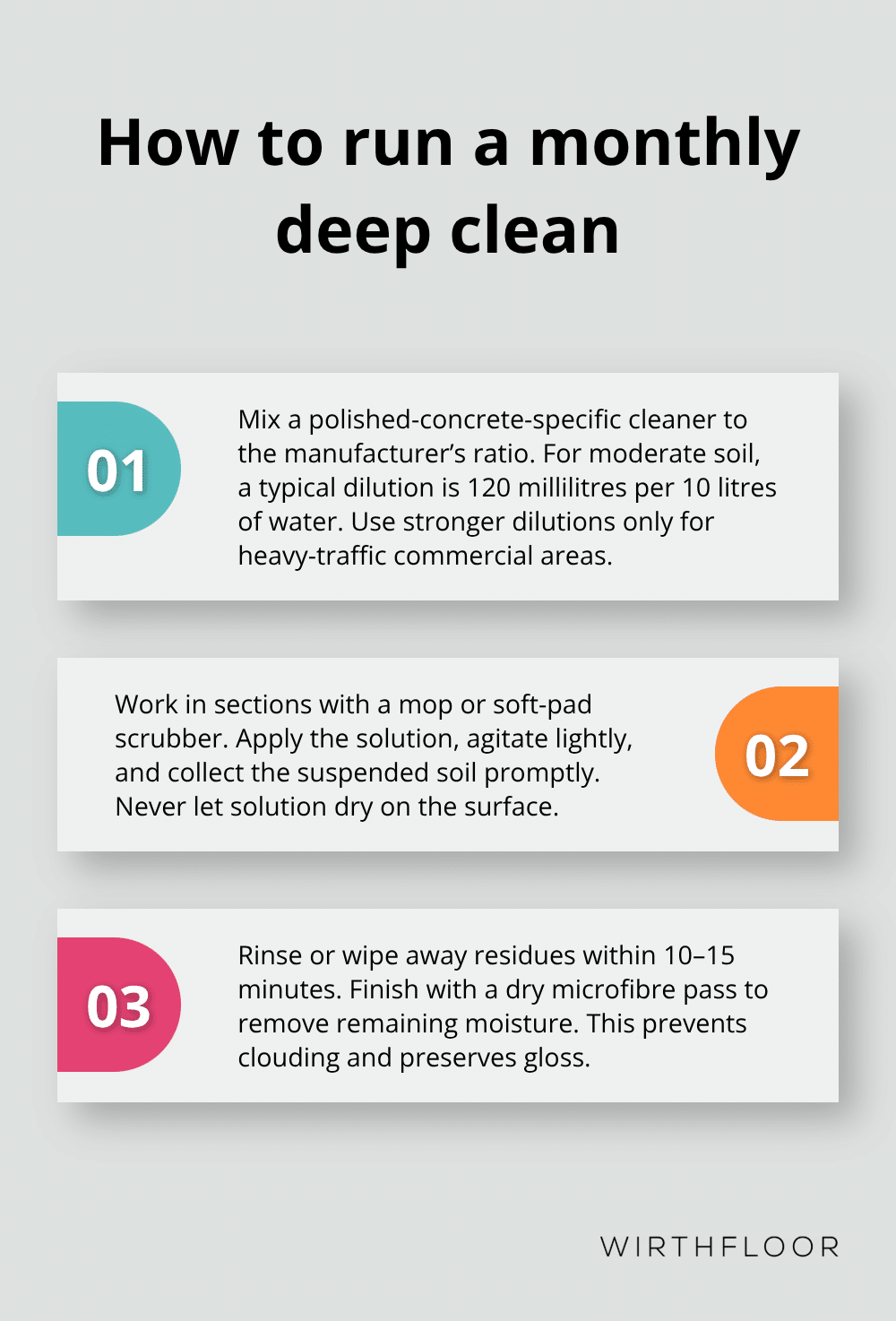
When you deep clean, dilute your cleaner according to the manufacturer’s instructions-typically around 120 millilitres per 10 litres of clean water for moderate dirt buildup. Higher-traffic commercial kitchens or retail spaces on the Gold Coast need stronger dilution ratios, roughly 120 millilitres per 7.5 litres of water. An automatic floor scrubber with soft pads makes this process efficient on larger areas, but a standard mop works fine for residential spaces. Never let the cleaning solution sit on the surface; apply it, work the area systematically, and rinse or wipe away all residue within 10 to 15 minutes. Water pooling on polished concrete is your enemy-it seeps under the sealer and creates cloudy patches that take weeks to dry out completely.
Addressing Stains Before They Become Permanent
Stains demand immediate attention because polished concrete’s porous substrate absorbs liquids within minutes if left unaddressed. Wine, coffee, and oil spills set permanently if you wait even an hour, especially in Brisbane’s warm climate where moisture accelerates absorption. The moment a spill happens, blot it with a clean cloth rather than wiping, which spreads the liquid further into the surface. For stubborn stains that resist your regular cleaning routine, a poultice powder designed for hard surfaces can draw out embedded discolouration from deeper within the concrete. Apply the powder according to product directions, allow it to sit overnight, then sweep and mop the residue away. This approach works particularly well for rust marks or organic stains that standard cleaners won’t touch.
Microfibre Tools and Replacement Schedules
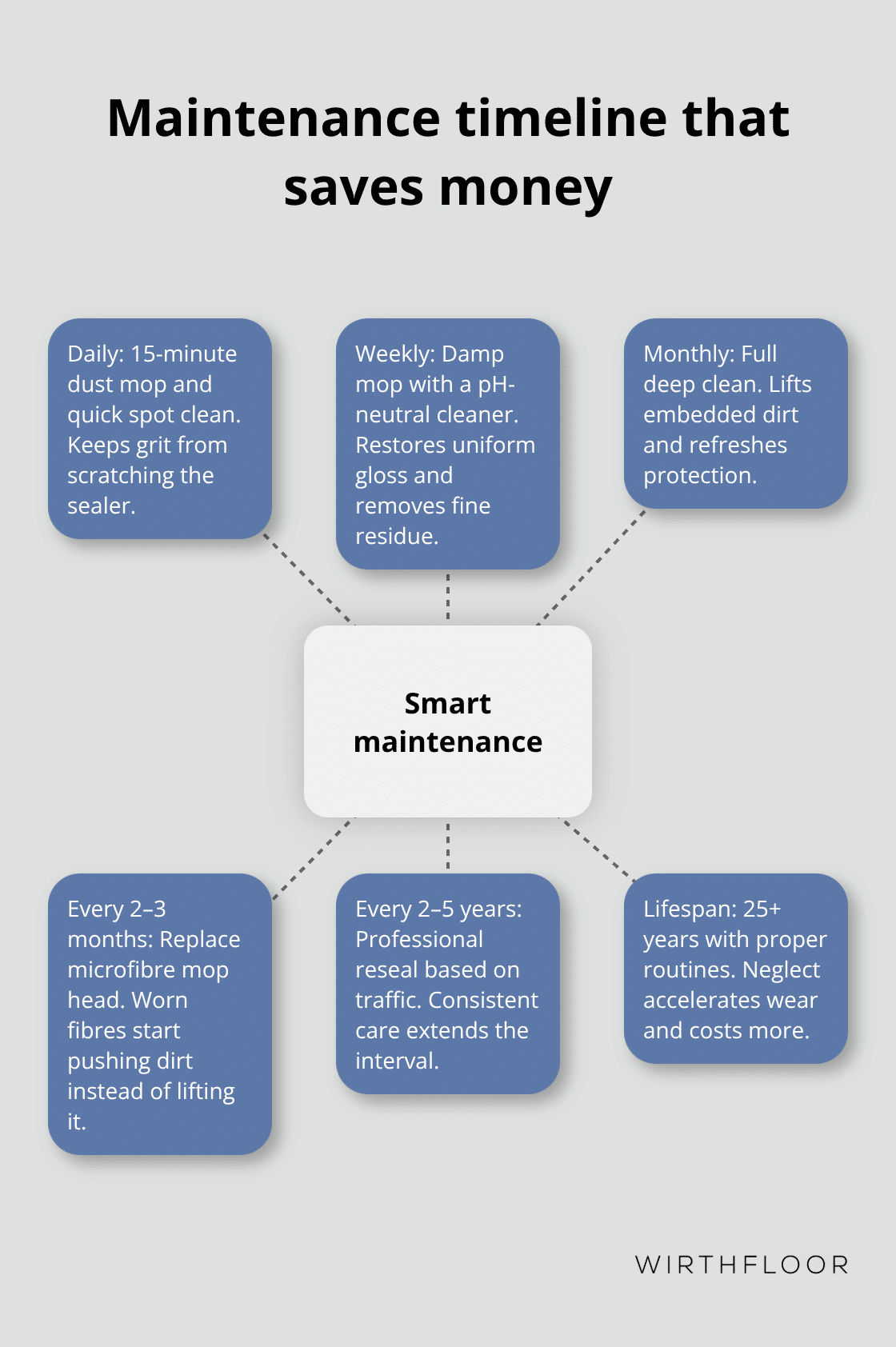
Between your monthly deep cleans, a microfibre mop remains your best tool because it captures fine particles and moisture without leaving streaks or lint behind. Change your mop head every two to three months, as worn microfibre loses its lifting power and starts pushing dirt rather than collecting it. Your commitment to this monthly schedule, combined with daily habits, extends the time between professional resealing from every 12 months to every 24 to 36 months, depending on foot traffic and environmental factors in your area. However, mistakes during cleaning can undo all this progress-and some damage happens faster than you’d expect.
Common Mistakes That Damage Polished Concrete Floors
Wrong Cleaners Destroy Your Sealer Fast
The cleaning products you choose matter far more than most property owners realise. Acidic and alkaline cleaners destroy polished concrete sealer permanently, and the damage happens faster than you’d expect. Vinegar, citrus-based products, ammonia, and bleach chemically etch the protective layer within minutes of contact. Once etched, that section of your floor loses its gloss and becomes dull and porous, trapping dirt and moisture underneath.
On the Gold Coast and Brisbane, we see this damage regularly from well-meaning owners who grab whatever cleaner sits under the kitchen sink. The sealer protects your concrete investment, so anything that compromises it directly shortens your floor’s life by years. Stick exclusively to pH-neutral cleaners with a rating between 6.5 and 8.0. Your floor deserves products formulated specifically for sealed concrete, not generic multi-surface cleaners that leave residue and accelerate wear.
Excess Water Creates Permanent Damage
Water damage from over-wet mopping ranks equally dangerous because excess moisture seeps under the sealer and creates cloudy patches that take weeks to dry completely. Delamination occurs when water pools between the sealer and concrete, separating the protective layer and forcing expensive professional resealing. Damp mopping differs fundamentally from wet mopping-your mop should feel like a wrung-out cloth, not a dripping sponge.
If water beads on your floor during cleaning, you’re using too much liquid. Wipe the area immediately after mopping and finish with a dry microfibre pass to eliminate standing moisture. These two mistakes-wrong cleaners and excess water-account for most damage we encounter on properties across the Sunshine Coast region.
Neglected Maintenance Costs Far More Later
Skipping your maintenance schedule creates compounding problems that become exponentially more expensive to fix. A property that receives consistent daily sweeping and weekly mopping needs professional resealing every 2–5 years, depending on foot traffic and exposure, while a neglected floor requires intervention more frequently. Dust and grit left on the surface act as abrasives under foot traffic, grinding micro-scratches into the sealer that dull the finish permanently.
Within six months of skipping daily cleaning, high-traffic areas near entrances develop visible wear patterns that burnishing alone cannot restore. Monthly deep cleaning prevents embedded dirt from building up and accelerating sealer degradation. The cost difference is substantial: maintaining proper routines costs roughly 300 to 500 dollars over a decade, while neglected floors demand costly professional restoration and premature resealing.
Your daily 15-minute routine is the cheapest insurance against damage, yet it’s also the easiest habit to abandon when life gets busy. Properties on the Gold Coast that maintain consistent cleaning schedules report floors looking nearly new after five years, while those that clean sporadically show significant deterioration in the same timeframe. The protection sealer provides only works when you keep the surface clean enough for it to function properly.
Final Thoughts
Consistent cleaning of polished concrete floors protects your investment for decades and determines whether your floors look sharp in five years or show premature wear. Your daily 15-minute routine, weekly damp mopping with pH-neutral cleaner, and monthly deep clean work together to extend the time between professional resealing from every 12 months to every 2–3 years, saving thousands of dollars over your floor’s lifetime. Properties across Brisbane, the Gold Coast, and Sunshine Coast that maintain these schedules report floors looking nearly new after five years, while neglected floors deteriorate significantly in the same timeframe.
A well-maintained polished concrete floor lasts 25 years or more, outlasting carpet, vinyl, and most tile installations when you avoid the compounding damage that comes from skipping routines. The sealer you invested in only protects your concrete when the surface stays clean enough for it to work properly, so stock your cleaning supplies with pH-neutral products formulated specifically for sealed concrete and replace your microfibre mop head every two to three months. You prevent costly damage and keep your floors looking exceptional for years to come through this small, consistent effort.
If you’re planning a new polished concrete installation or need professional guidance on maintaining existing floors, we at Wirth Floor specialise in polished concrete and epoxy flooring solutions designed for durability and easy maintenance. Contact us today to discuss your flooring project and discover how proper installation and maintenance work together to deliver lasting results.